ISO 20022 Migration Is Complete. Now Comes the Hard Part: Harmonisation
Migration was the easy part. Harmonisation is where the real value begins — why consistent use of ISO 20022, rather than adoption of it, is the next phase of payment modernisation.
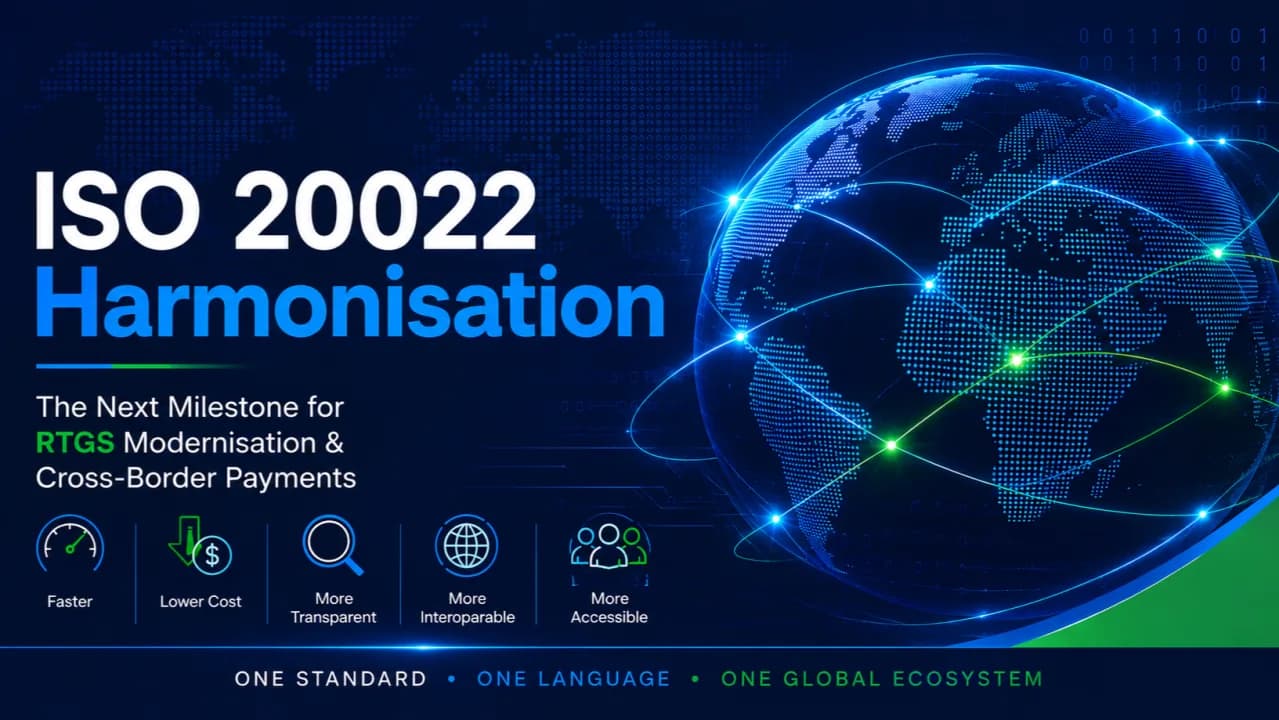
Over the last few years, central banks and financial institutions around the world have invested heavily in migrating to ISO 20022. For many, the successful completion of the SWIFT MT migration marked the finish line.
I see it differently.
Migration was the easy part. Harmonisation is where the real value begins.
A recent report from the BIS Committee on Payments and Market Infrastructures (CPMI) reinforces this point. It reminds us that while ISO 20022 gives the industry a common messaging standard, the benefits are only realised if we use it consistently across jurisdictions and payment systems.
Migration alone does not guarantee interoperability. Harmonisation is now the industry's next major challenge.
The challenge isn't XML — it's consistency.
I've seen a common misconception: once a system supports ISO 20022 messages, the job is done.
In reality, that's only the beginning.
Today, different payment systems often use:
- Different implementation guidelines
- Different optional fields
- Different approaches to party identification
- Different address formats
- Different local code sets
Technically, they all support ISO 20022. Operationally, they don't always speak the same language. That's exactly the challenge the BIS is trying to address.
Why this matters for RTGS modernisation
Every central bank modernising its RTGS platform has a unique opportunity. Instead of simply replacing legacy message formats, modern RTGS infrastructures can become the foundation for seamless domestic and cross-border interoperability.
The BIS recommends greater consistency in areas such as:
- Standard use of ISO 20022 messages
- Structured party and address information
- Globally recognised identifiers like BIC, with LEI encouraged where appropriate
- Universal End-to-End Transaction Reference (UETR)
- Transparent representation of payment amounts, charges and FX information
- Preservation of remittance information across the complete payment chain
These are not simply technical improvements — they directly improve straight-through processing (STP), reduce payment repairs, strengthen sanctions and AML screening, and enhance the customer experience.
The next phase of payment modernisation
The payments industry has spent years discussing ISO 20022 migration.
I believe the conversation is now shifting.
The next wave of innovation won't be driven by adopting a new messaging standard. It will come from using the same standard in a truly harmonised way.
One of the most valuable messages in the BIS report is that harmonisation is not a regulatory exercise. Instead, it is an industry-wide effort to create a common implementation approach that enables interoperability across:
- RTGS systems
- High-value payment systems
- Instant payment systems
- Correspondent banking
- Cross-border payment networks
- Future digital money infrastructures
As tokenised deposits, CBDCs, and programmable payments continue to evolve, consistent, high-quality data will become even more important than the messaging format itself.
The Road Ahead
The BIS recommends industry-wide alignment with its harmonised ISO 20022 data requirements by the end of 2027. While these are not regulatory mandates, they provide a practical roadmap for improving interoperability and reducing friction across the global payments ecosystem.
For those leading RTGS modernisation programmes, this is an opportunity to think beyond technology upgrades.
The goal should not simply be to build an ISO 20022-compliant RTGS.
The goal should be to build an RTGS platform that can seamlessly connect with the evolving global payments ecosystem.
Because in the next decade, interoperability will be measured not by whether systems use ISO 20022 — but by how consistently they use it.